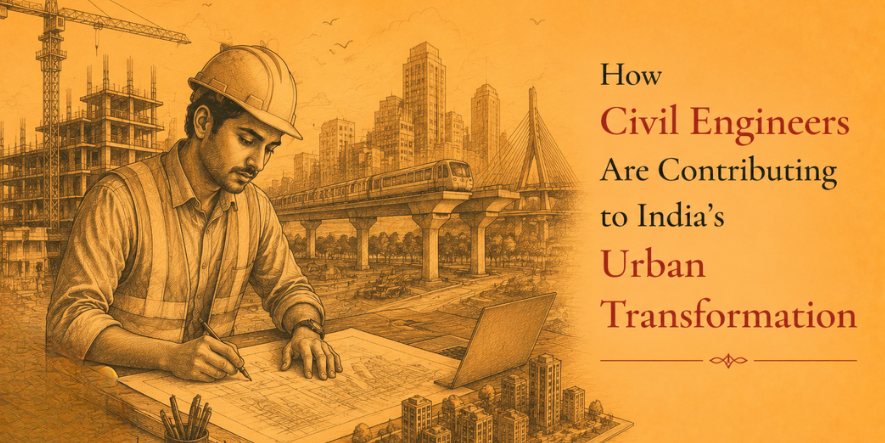
India is currently undergoing rapid urban development. Metropolises are expanding to accommodate the increasing sectors, businesses and populations. This specific development has created a higher demand for smart conveyance systems and better infrastructure. Civil engineers are said to play a critical part in this particular transformation. They can maintain, build and even design the infrastructure that backs modern-day metropolises. From bridges and roads to smart edifices and water supply systems, their work can enhance the quality of urban life. As the country keeps on investing in urban development, civil engineers from the best B Tech civil engineering colleges in India are building cities that are efficient and secure.
Urban development is said to rely heavily on strong edifices. Civil engineers contribute to projects that can enhance environmental sustainability, smart city structure, and public utilities. They also contribute to drainage systems, water supply systems, commercial areas, residential builds and conveyance networks. Their expertise also backs long-term economic development along with urban planning.
Good conveyance stands out as an essential part of every growing metropolis. Civil engineers have the power to create pedestrian pathways, highways, roads and even bus terminals. They can also construct metro rail systems, flyovers and bridges. Well-planned transport systems can lower travel time. It can also support economic growth and enhance connectivity. Modern-day engineering methods can also enhance durability and safety.
The country’s urban transformation includes the growth of smart metropolises. Civil engineers from B Tech civil engineering colleges in Pune contribute by creating infrastructure that supports smart roads, public utility networks, smart traffic systems, and digital infrastructure. They also contribute to energy-efficient buildings and urban planning. They also work with technology specialists, planners and architects to make well-connected urban settings.
Clean water is essential for healthy cities. Civil engineers design systems for:
Effective water management can lower flooding. It can also enhance sanitation and support sustainable urban development.
Read More – College vs Career: How to Choose a Civil Engineering Institute Based on Goals
Environmental responsibility has become a major priority. Civil engineers now focus on:
All these approaches can help in creating metropolises that are environmentally friendly. It also lowers the impact of urban growth.
Cities can experience certain challenges, like extreme weather conditions, earthquakes and floods. Civil engineers can assemble structures that can enhance strength through the following:
The country’s growing population has increased the need for homes. Civil engineers can also support residential project expansion by ensuring structural security, planning housing tasks and developing supporting facilities. They can also offer their support by planning the housing projects and creating apartment complexes. A properly designed home can enhance the living standards. It can also support organised urban growth.
Today’s civil engineers need both technical and professional skills. Important skills include:
Ongoing education can help every engineer adapt to the growing industry needs effectively.
Read More – How to Apply for B.Tech. Admission in Pune Colleges
Civil engineers are currently creating the urban future via planning, innovation and sustainable infrastructure growth. They create smart conveyance, efficient water systems, secure roads and environmentally responsible construction. As metropolises keep on expanding, the need for skilled civil engineers will stay strong. For learners who want to contribute to the country’s infrastructure development, ADYPU can offer a future-focused educational experience. Being one of the top B Tech civil engineering colleges in Maharashtra, the institute’s courses blend industry collaboration, practical orientation, and modern-day engineering methods. The institute also keeps its focus on real-world project experience and smart city solutions. This enables them to help learners become skilled experts and contribute to the country’s continuous urban transformation.
1. How does this course contribute towards weather-resilient metropolises?
These experts can create flood-control units, drainage networks and earthquake-immune structures. These things can help cities withstand the changing weather conditions and natural disasters.
2. Is it possible for civil engineers to work on heritage conservation tasks?
Yes. Civil engineers usually help in restoring historical edifices, memorials and bridges. They do so by strengthening them and preserving their cultural and architectural importance.
3. What type of role do civil architects play in waste control?
These experts can create water collection facilities, plants for sewage treatment, and landfills. Their work can lead to cleaner cities and enhance public health via effective water management systems.
4. Do digital technologies change the role of civil engineers?
Yes. Technologies like BIM, GIS, digital surveying tools and drones have made maintenance, monitoring, construction and planning a lot easier, more efficient and accurate.