Mukta Chaudhari
Btech CSE 3rd year , Division B
I recently attended a powerful session by Arnav Sharma that changed the way I look at innovation and industry. He spoke about products but it made me see a different perspective which was that it had left behind a broken youth. His words made me reflect on Sustainable Development Goal 9 (SDG 9): Industry, Innovation, and Infrastructure. SDG 9 emphasizes building resilient infrastructure, promoting inclusive and sustainable industrialization, and fostering innovation. But what happens when innovation is used to build habits that destroy rather than build?
Cigarettes: The Profitable Addiction
One striking example that Arnav mentioned from the session was about cigarettes. A cigarette that costs barely 0.75 paise to produce is sold in the market for around 25 rupees. The profit margin is enormous, and it demonstrates the power of industry and branding. Cigarettes were once marketed as glamorous, sophisticated, and even healthy. Today, we know they are one of the leading causes of cancer, respiratory illnesses, and premature deaths. Yet, the cigarette industry continues to thrive globally, contributing significantly to GDP while destroying lives.
This contradiction is at the heart of the problem with innovation when it serves profit over people. It shows how infrastructure and industry can be resilient, but not necessarily responsible. Yes, cigarette companies have mastered innovation—perfecting the addictive formula of nicotine and crafting marketing strategies that turn smoking into a habit. But this kind of innovation is antithetical to the spirit of SDG 9. It builds industries on the ashes of youth health and well-being.
Instagram: The Digital Cigarette
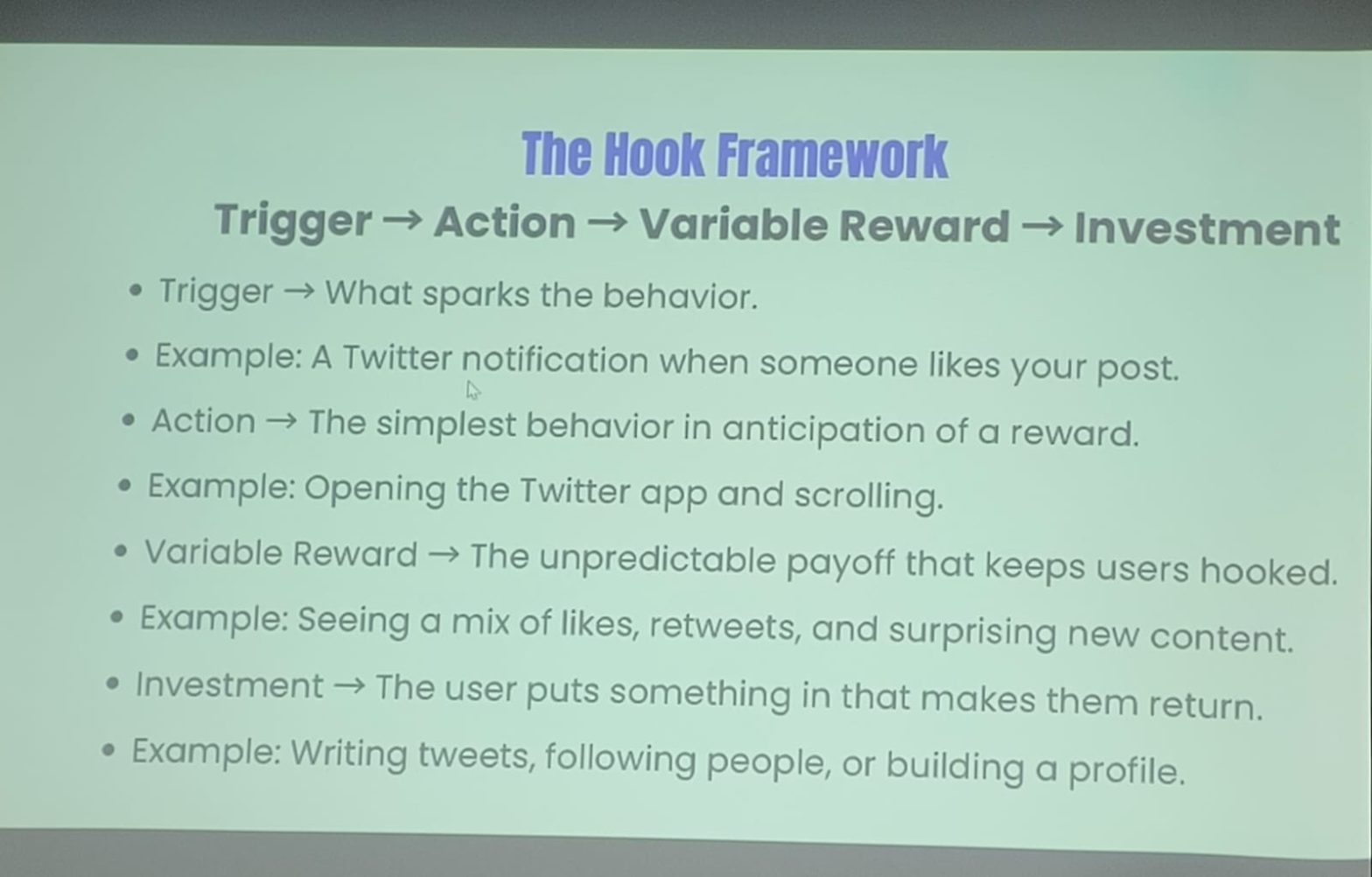
If cigarettes are the physical addiction of the past century, Instagram is the digital addiction of the present. Just like nicotine hooks the body, Instagram hooks the mind. Its design is not accidental—it is built on habit-forming psychology. The Hook Framework, as discussed in the session, explains exactly how platforms like Instagram keep us glued:
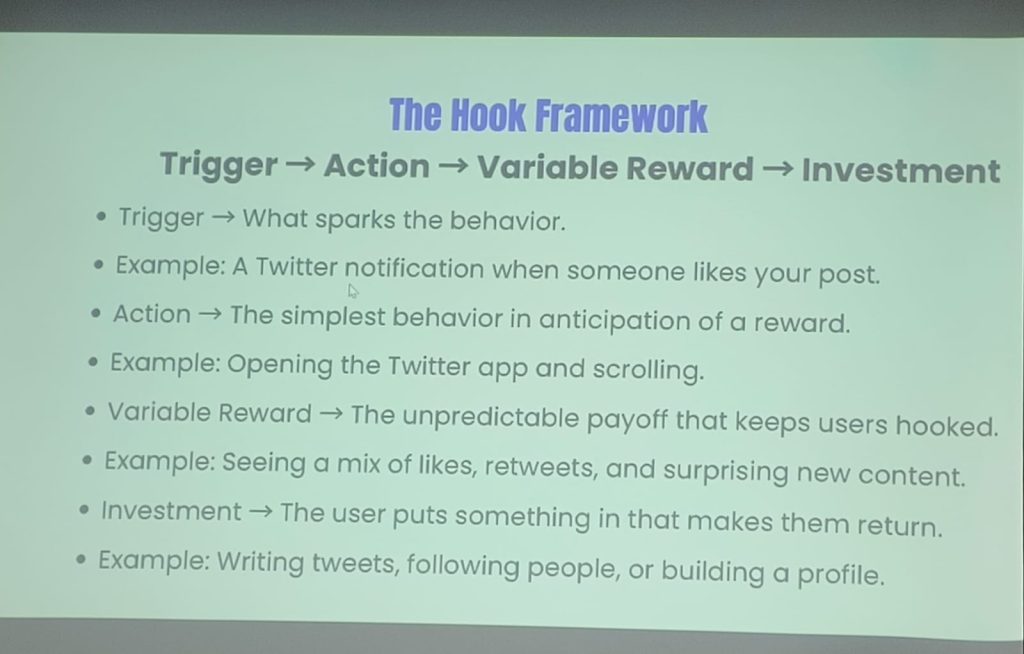
• Trigger → A notification when someone likes your photo.
• Action → You open the app and scroll.
• Variable Reward → The unpredictable mix of likes, comments, reels, and surprises that keep you wanting more.
• Investment → You post more, engage more, and put more of your time into the app, making it harder to leave.
This framework is ingenious, but also dangerous. It manipulates the human brain’s reward system, especially that of young users, making Instagram as habit-forming as cigarettes. Instead of nicotine, it feeds on attention, validation, and dopamine. The result is a generation that is more connected than ever digitally, but perhaps lonelier, more anxious, and more distracted in real life.
The Youth and the Broken Community
The most painful part of these habit-building innovations is their impact on youth. We see peers glued to their screens, scrolling endlessly through reels, chasing likes, or sneaking away to smoke cigarettes. Both industries thrive on youth vulnerability, and both feed GDP at the expense of personal well-being. Entrepreneurs often talk about community-building, but what community are we building if the foundations are unhealthy habits?
The truth is, these innovations fracture the community more than they strengthen it. They create superficial networks and fragile identities. Young people are pressured into cycles of consumption, either through substances like cigarettes or through endless digital validation. The result is a hollow sense of belonging, where infrastructure and innovation serve corporations, not communities.
The Real Spirit of SDG 9
SDG 9 is not just about industry and innovation—it is about sustainable and inclusive growth. Innovation should not only drive profits; it should empower societies. Infrastructure should not only support industries; it should support healthy communities. What we see with cigarettes and Instagram are industries built on exploitation. They are sustainable in terms of profits, but deeply unsustainable in terms of human health and youth potential.
If we want to truly achieve SDG 9, we must challenge the idea that success is measured by profit margins and user engagement alone. Instead, success should mean building products that foster well-being, strengthen communities, and create healthier habits. The youth deserve innovations that build them up, not ones that break them down.
Conclusion: Towards Responsible Innovation
The session by Arnav Sharma opened my eyes to a harsh truth: some of the world’s most successful industries are also its most destructive. Cigarettes and Instagram are proof that habit-forming innovation can be wildly profitable but devastating for youth. The challenge for today’s entrepreneurs is not just to innovate, but to innovate responsibly. The future lies not in building addictions, but in building resilience. Not in feeding GDP at the cost of youth, but in building healthy communities where both industry and humanity can thrive.