or digital renderings. Physical model. They also permit designers to assess proportion, form and finishes in three dimensions. This is where automotive clay modelling becomes necessary. Clay models allow a designer to judge the flow, balance and ergonomics of a new vehicle before committing it to production.
This is a process that offers the craftsman’s precision and materiality to digital, marrying artistic ability with engineering know-how with practical trade skills. For aspiring automotive designers, there is still no better way to prepare for your career-building future work than the study of clay modelling.
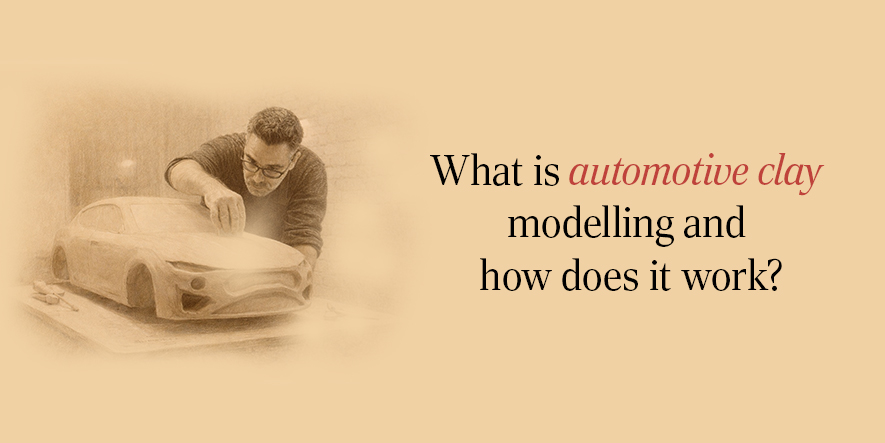
Automotive clay modelling refers to the process that involves full size or scale clay models of the designs being developed. Unlike common modelling clay, automotive modelling clay is flexible, durable, and consistent so as to allow the designer to build up and refine surfaces several times with high levels of precision.
The primary features of automotive clay modelling are:
In general, the process begins with a wireframe or wooden buck framework. over which clay is applied to sculpt the form. Designers utilise specific tools to carve, smooth and polish surfaces so that the model closely resembles the final design.
Automotive design clay modelling is a set of hidden inputs and outputs in terms of technicalities and creativity. Designers can interact directly with the form of the vehicle.
Typical methods in automotive design clay modelling are:
Although CAD software is highly accurate, automotive moulding clay gives designers a hands-on experience making it easier to understand depth, ergonomics and surface transitions. In contrast to prototypes made of plastic or metal, clay can be readily moulded and manipulated, allowing for experimentation and improvement.
Also Read – Why Choose a UX Design Degree at ADYPU
It’s useful hands-on with industrial design automotive modelling clay for soon-to-be car designers. It develops technical capabilities and artistic feel while ultimately enhancing vehicle surfaces.
Through practical modelling, students learn:
By learning clay modelling in the classroom, students receive structured feedback, industry-standard tools and hands-on professional techniques that otherwise are not available outside of specialized studios.
At Ajeenkya D Y Patil University (ADYPU), there is a state-of-the-art automotive clay modelling studio housed in the School of Design. The focus of the course is on experiential, studio-based learning, supported by internationally recognized industry practitioners.
Salient features of the ADYPU programme are:
The curriculum is a mix of visual arts process and technique. The student will graduate with a profound knowledge of automotive surface, methods of automotive design, clay modelling, and studio practice, as well as gaina strong portfolio of concept and technical skill sets.
Know More – Why BDes Fashion Design Is Becoming the Most In-Demand
Automotive clay modelling is one of the key processes that takes design cues from a glint in an eye to reality. By integrating creativity into accurate technical control, it enables the creation of demos, prototypes and illustrations for a wide variety of source materials. If you want a career in automotive design, the skill of modelling clay is something that is necessary to everday practice in a design studio.
You don’t have to look any further than the School of Design at Ajeenkya D Y Patil University, which is equipped witha world-class modelling studio supported by excellent faculty and industry relevant curriculum. In addition to fluency in the language of automotive design, students in the university’s program practice with hand-sculpted automotive modelling clay among other expertise that will prepare them for a career in the industry.
1. What is automotive clay modelling?
Automotive clay modelling is an industrial design technique whereby three-dimensional models of a subject vehicle or product are developed using specialised, designed clay. This makes it possible for designers to realize proportions, surface flow and aesthetics in three dimensions before a concept is transformed into a production model. It delivers the finesse of artistic talent with sleek lines plus the accuracy and precision you need for drafting.
2. How does automotive design clay modelling differ from other modelling techniques?
Automotive clay modelling is the precise, meticulous discipline of shaping vehicle surfaces. In sharp contrast with digital CAD models, this enables designers to touch and feel the form, to refine curves, corners and edges as well as evaluate light reflections and ergonomics on the fly. This approach connects the concept and physical representations to better see and iterate on it.
3. Why is automotive molding clay important in automotive education?
Automotive molding clay is essential for learning hands-on design skills. It is flexible, durable, and easy to shape, which enables students to experiment, iterate, and perfect vehicle surfaces. Working with molding clay develops technical precision, surface understanding, and creative problem-solving skills that are critical for professional automotive design.
4. How is automotive clay modelling taught at Ajeenkya D Y Patil University?
At ADYPU’s School of Design, there’s a modern automotive clay modelling studio where students are taught concepts in automotive clay modelling and automotive design clay modelling through a studio-based approach. They teach courses on surface development, iterative design, and the process of taking sketches or digital models all the way to full-scale clay prototypes, providing students with yet more exposure and hands-on experience at a professional level.